When it comes to bikini line grooming, there is no shortage of options — and no shortage of strong opinions. Razors promise speed, waxing promises longevity, and trimmers promise a middle ground. But which method actually deserves a spot in your routine? The honest answer: it depends on your skin, your pain tolerance, your budget, and how much time you want to spend.
This guide breaks down the three most popular bikini hair removal methods side by side, so you can make the call with clear eyes — and smooth skin.
The Razor: Fast, Cheap, and Familiar
The razor is the default for a reason. It is inexpensive, available everywhere, and gets the job done in minutes. For a quick touch-up before a beach day, nothing beats it on convenience.
Pros:
● Lowest upfront cost — a pack of disposable razors costs a few dollars
● Fastest method — a full bikini line cleanup takes under five minutes
● No appointment, no equipment, no learning curve
Cons:
● Highest risk of razor burn, nicks, and ingrown hairs, especially on sensitive skin
● Results last one to three days at most
● Ongoing cost adds up — quality razors and shaving cream are a recurring expense
Best for: Last-minute touch-ups and anyone on a tight budget who does not have highly sensitive skin.
Skin tip: Always shave with the grain on the first pass, use a fresh blade, and apply a fragrance-free moisturizer immediately after. Dull blades are the number one cause of bikini line irritation.
The Bikini Trimmer: The Balanced Middle Ground
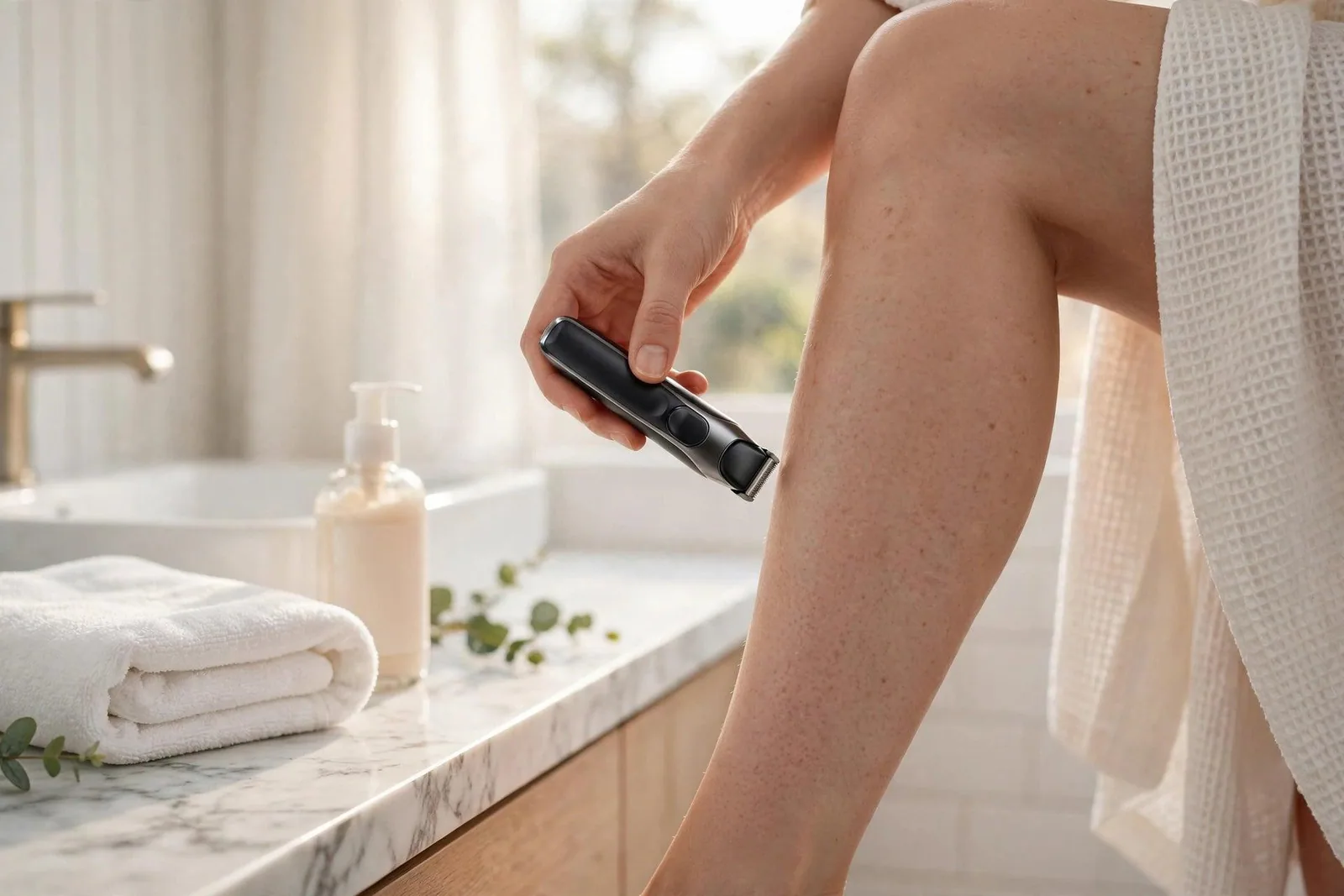
An electric bikini trimmer cuts hair just above the skin rather than at or below it, like a razor does. That single difference changes the entire experience: far less friction, far fewer ingrown hairs, and virtually no nicks.
Modern trimmers designed for the bikini area are a different breed from the clippers you might be picturing. They are compact, often waterproof, with rounded blade heads and adjustable guards that let you control length. Many are USB-rechargeable and quiet enough to use without announcing it to the household.
Pros:
● Much gentler on sensitive skin than razors — the blade never scrapes the skin surface
● Dramatically fewer ingrown hairs, the most common bikini grooming complaint
● One-time purchase — no recurring blade or cream costs
● Fast and private — a full routine takes about ten minutes at home
Cons:
● Does not give the "baby smooth" finish of a razor or wax — hair is trimmed short, not removed
● Quality varies widely — cheap trimmers tug and pull
● Needs occasional charging and blade cleaning
Best for: Sensitive skin, anyone prone to ingrown hairs, and people who want a low-maintenance routine without appointments.
Skin tip: Trim on dry skin before showering for the closest result, then rinse and moisturize. If you are switching from razor to trimmer, give your skin a week to adjust — the first session may feel unfamiliar, not worse.
Waxing: The Long Game
Waxing pulls hair out from the root, which means results last three to six weeks — by far the longest of any method here. Over time, regrowth can become finer and sparser.
Pros:
● Longest-lasting results by a wide margin
● Hair regrows softer over time with consistent waxing
● No daily or weekly maintenance between sessions
Cons:
● Painful — there is no way around it, especially the first few sessions
● Expensive — professional bikini waxes run $50 to $100+ per session, several times a year
● Requires regrowth — you need a quarter inch of hair before each appointment, which means awkward in-between weeks
● Risk of burns, bruising, and ingrown hairs if done poorly
Best for: Special occasions, vacations, and anyone willing to trade pain and money for weeks of smoothness.
Skin tip: Exfoliate gently 24 to 48 hours before your appointment (never right before), and avoid tight clothing afterward. If you are waxing at home, test the temperature on your wrist first — bikini skin burns easily.

Head-to-Head Comparison
| Razor | Bikini Trimmer | Waxing |
Cost per year | 60 | $40 one-time | 600+ |
Results last | 1–3 days | 3–7 days | 3–6 weeks |
Pain level | None | None | Moderate to high |
Ingrown hair risk | High | Low | Medium |
Time per session | 5 min | 10 min | 30–60 min |
At-home friendly | Yes | Yes | Difficult |

So Which Should You Choose?
If you want the closest shave and do not mind the upkeep, the razor still has its place. If you want weeks of smoothness and can handle the cost and discomfort, waxing delivers. But for most people, most of the time, the trimmer hits the sweet spot: gentle enough for sensitive skin, fast enough for a busy schedule, and cheap enough to be a no-brainer over a year of razor refills.
Many women end up combining methods — a trimmer for weekly maintenance, a razor for occasional touch-ups, waxing before a big trip. There is no rule that says you must pick one forever.
Whatever you choose, the fundamentals do not change: keep blades clean, moisturize after every session, exfoliate regularly but gently, and listen to your skin. If a method consistently leaves you irritated, it is not the right method for you, no matter how popular it is.
And if you are curious about making the switch, browsing a dedicated electric shaver for women collection is a good starting point — look for waterproof designs, rounded blade heads, and USB charging, the three features that separate a good trimmer from a drawer full of regret.

This article is for informational purposes only and does not constitute medical advice. If you experience persistent irritation, ingrown hairs, or skin reactions, consult a dermatologist.


